

How a billion-franc global brand confronted declining relevance, redefined its role for modern families and reversed a long-running decline in sales revenue.
The business challenge
Nesquik was one of Nestlé’s most recognisable global brands, generating more than CHF1 billion a year across beverages, cereals, chilled products and treats.
But beneath that scale, the brand was moving in the wrong direction.
The biggest problem sat in powder, which accounted for more than 46% of the portfolio. Value had been declining at a 5.4% three-year CAGR and 7.7% over five years, while the wider brand was also struggling to recruit enough new families to replace those leaving.
The response had increasingly been short term. Promotional intensity averaged around 49%, while only 28% of investment was going into core media and just 4% into digital. That might help protect volume in the moment, but it was doing little to rebuild the underlying desirability of the brand.
The irony was that Nesquik had not stood still as a product business. The portfolio had expanded into new formats and healthier propositions. But the brand had failed to evolve at the same pace. Consumers still associated it primarily with chocolate powder, the yellow pack and Quicky the rabbit, while research increasingly described it as old-fashioned, repetitive and too closely associated with a previous generation of childhood.
The challenge was not simply to create new advertising. Nesquik needed to become relevant to a new generation of parents and children without throwing away the heritage and distinctive assets that had made it famous.
What the analysis revealed
The strategic work looked beyond the immediate decline and examined what had changed in the category, parenting, nutrition, childhood and media behaviour.
The first important finding was that the competitive set was much broader than flavoured milk. At breakfast and snack occasions, Nesquik was competing with everything from milk and juice to yoghurt, cereals, fruit and spreads. If Nesquik disappeared from the cupboard, consumers could replace it relatively easily.
The category had become a nice-to-have rather than an essential part of the family routine.
At the same time, the health debate was changing. Parents were concerned about sugar, additives and naturalness, but research showed that their definition of healthy eating was not necessarily about eliminating enjoyment. Parents increasingly sought balance: good nutrition, convenience and food that children actually wanted to consume.
Taste remained one of the strongest drivers of consumption, alongside nutrition.
That gave Nesquik permission to occupy a space between the two. It did not have to choose between being nutritious for parents or enjoyable for children.
There was a second, equally important change. Childhood itself had moved on.
The world had changed, but Nesquik hadn’t
Children were spending less time in traditional forms of play and significantly more of their lives online. In 2018 alone, around 62 million children globally went online for the first time, while almost half of 8–11-year-olds preferred YouTube to television.
Children increasingly had access to their own smartphones and tablets, and many of the brands they loved most were technology and entertainment brands rather than traditional children’s brands.
Parents had changed too. They were mobile-first, permanently connected and increasingly comfortable sharing digital experiences such as gaming with their children.
Yet Nesquik was still behaving largely like an analogue FMCG brand. This became the central diagnosis:
The world had changed, but Nesquik hadn’t
The problem was therefore deeper than an ageing visual identity or an outdated media plan. Nesquik’s historic view of childhood, family life and brand engagement no longer matched the reality of the people it was trying to reach.
The strategic shift: redefine Nesquik’s role in modern childhood
The brand needed to reconnect with the reason people had loved it in the first place, but express that role in a way that made sense for modern families.
The new brand essence became:
Making growing up fun and healthy
This gave Nesquik a much clearer role.
It allowed the brand to balance the two things both sides of the family relationship wanted. Parents could feel they were providing something nutritious and appropriate, while children could still experience Nesquik as enjoyable, playful and fun.
Importantly, the strategy did not define health in rigid terms. It reflected the way modern parents increasingly thought about family nutrition: balancing better ingredients and nutritional benefit with enjoyment, convenience and moderation.
The platform also gave markets flexibility. Some markets needed to work harder on health credentials; others could lean more strongly into enjoyment. Both could still build the same global brand.
How the strategy worked
Turn a product benefit into a meaningful role
Historically, Nesquik had been very good at talking about products. The new strategy asked a bigger question: what role should Nesquik play in family life?
The answer was built around transforming ordinary moments into enjoyable ones. The brand personality was defined as a “fun-loving magician” – playful, surprising and uplifting, with an ability to make everyday moments more pleasurable.
Functionally, Nesquik could help make nutritious foods such as milk more enjoyable. Emotionally, it could help create happy moments between parents and children.
That combination provided a stronger organising idea than simply advertising chocolate flavour or individual nutritional claims.
Stop treating parents as one audience
The research also challenged the simplistic idea of a single “millennial mum”.
Parents differed significantly in how they approached health and parenting, ranging from highly controlled and nutrition-focused households to much more relaxed ones. Between those extremes sat parents who wanted sensible boundaries while still allowing their children independence, treats and enjoyment.
That helped move the strategy away from broad generational stereotypes and towards the attitudes that actually determined purchase decisions.
The most relevant audience believed that childhood should be enjoyed, while still paying attention to nutrition. That was precisely the tension the new Nesquik proposition was designed to resolve.
Create demand around occasions, not just products
The work also identified opportunities to build the brand around specific moments in family life rather than individual SKUs.
Breakfast, afternoon snacking and other moments carried different emotional and functional needs – from starting the day well to rewarding, bonding or satisfying hunger.
This created a framework for connecting different products in the portfolio to the reasons families consumed them, allowing Nesquik to increase relevance and frequency across the day rather than relying on one historic powder occasion.
Reinventing how the brand engaged with families
Changing the positioning was only part of the answer.
The strategy explicitly recognised that changing words on a brand model would achieve little unless Nesquik also changed how it behaved.
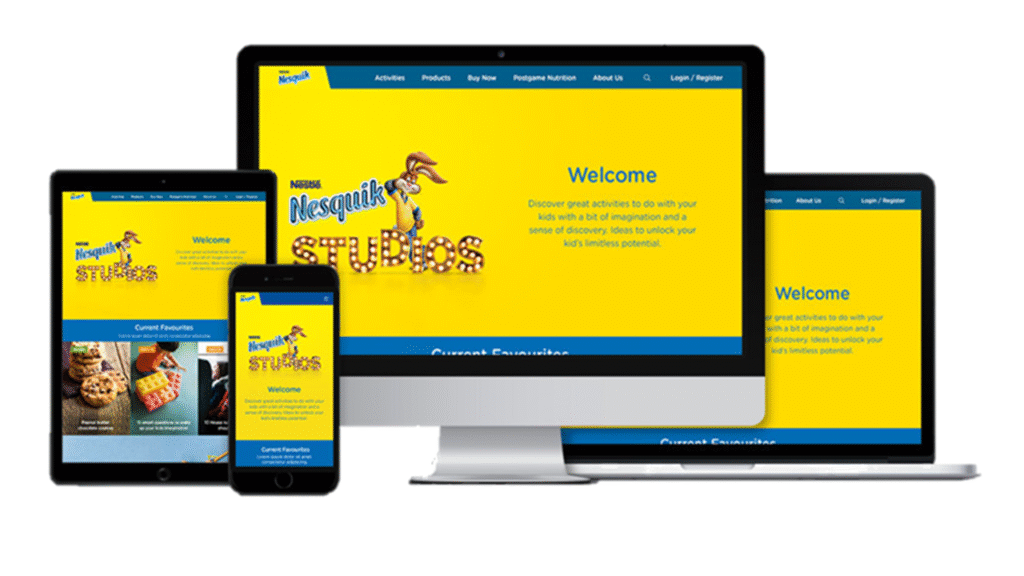
The biggest shift was towards becoming a mobile-first, digital-centric brand.
Rather than treating digital simply as another media channel, the opportunity was to use technology to bring parents and children together. The digital world had become common ground between them, creating new possibilities for a brand whose purpose was built around making childhood more enjoyable.
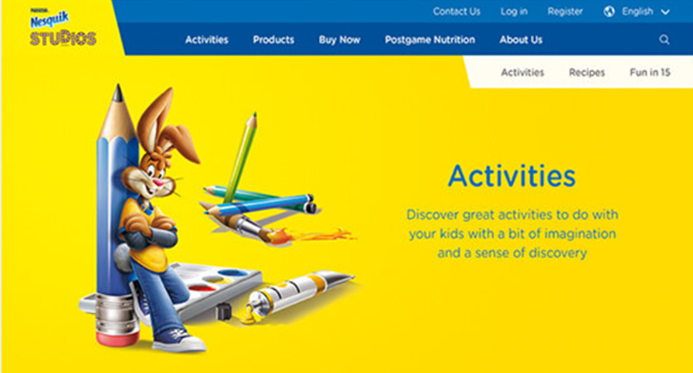
The strategy therefore proposed a digital ecosystem of content, games and experiences that parents and children could enjoy together. That included entertainment-led content, gaming partnerships, owned games and the gamification of physical activities – using technology to bridge digital and real-world play.
This represented a significant shift in the role of marketing. Nesquik needed to create value and enjoyment beyond product messaging, while still connecting that engagement back to product, trial and consumption.
Balance long-term brand building with short-term activation
The commercial diagnosis had shown the risk of becoming too dependent on promotions.
The new approach deliberately separated two jobs.
Brand building needed to make Nesquik relevant again to families who were no longer considering it. Sales activation could then convert that renewed relevance into trial and purchase.
The objective was to recruit new families while also increasing frequency across important consumption occasions, creating both short-term commercial impact and a stronger source of future growth.
The resulting objectives were clear: improve relevance among a new generation of parents, strengthen emotional connection, differentiate Nesquik at key meal occasions, recruit new families and increase frequency of consumption.
The commercial impact
The strategy was rolled out across markets at different times and in different ways, so there is no single global campaign result that accurately represents every country.
The most important overall commercial result was that Nesquik stopped its year-on-year decline in global sales revenue.
That mattered because the starting point was not a short-term sales dip. The largest part of the portfolio had been declining for several years, new families were not replacing those leaving and increasing promotional intensity had failed to change the underlying trajectory.
The turnaround came as the brand moved back towards longer-term brand building, modernised the role it played in family life and created a strategic platform capable of supporting new products and market-specific growth initiatives.
Why the strategy worked
The strategy began by distinguishing between heritage and nostalgia.
Nesquik had enormous brand equity, but protecting that equity did not mean preserving the way the brand had always behaved. The opportunity was to retain what made Nesquik distinctive – fun, taste, optimism and childhood enjoyment – while redefining how those qualities should show up for a modern family.
It also resolved a tension rather than choosing one side of it. Parents wanted better nutrition, while children wanted enjoyment. “Making growing up fun and healthy” allowed Nesquik to credibly embrace both.
Most importantly, the strategy was built around changes in people’s lives rather than changes in advertising. Modern childhood, parenting, health and media behaviour had all evolved. Once Nesquik acknowledged those changes, the opportunity became much bigger than a new campaign.
The brand could begin evolving from a nostalgic chocolate-milk brand into a broader platform designed around the realities of modern family life.
Capabilities demonstrated
Global Brand Strategy | Brand Rejuvenation | Growth Strategy | Consumer Insight | Segmentation | Portfolio Strategy | Digital Strategy | Customer Experience | Brand Positioning | Integrated Marketing
My role
As Global Director of Strategy, I led the strategic development of the Nesquik rejuvenation – bringing together consumer, category, cultural and brand research to diagnose the causes of decline, redefine the brand’s role around “Making growing up fun and healthy”, and develop the strategic framework for how the brand should engage with a new generation of parents and children.
The work also shaped the shift towards a mobile-first, digitally centric brand, the balance between long-term brand building and activation, and the role the wider Nesquik portfolio could play across different consumption occasions.
This work was completed during my agency career, working in partnership with the Nestlé global Nesquik team and the wider strategy, creative and account teams.