

How a founder-led US brokerage was turned into a clearly defined, scalable challenger brand – helping prompted awareness rise from 11% to 19% and supporting the next phase of tastytrade’s growth.
The business challenge
When IG Group acquired tasty, it was buying a very different kind of business.
tasty had been built by traders for traders and still operated with much of the energy and instinct of a start-up. The founders and long-standing employees knew intuitively what the brand stood for, how it should behave and what made it different. That understanding had been embedded in the culture rather than written down in a formal brand strategy.
For a small founder-led company, that had worked remarkably well. As the business began growing under IG, however, new people, new products and new channels were being added. The further the organisation moved away from the original founders, the harder it became to rely on institutional memory to protect what made tasty distinctive.
At the same time, the commercial ambition was growing. The strategy work at the time described a business with roughly 105,000 customers, less than 3% share of US options traders, limited historic marketing investment and very low awareness, but ambitions to become a much larger contributor to IG Group’s US growth.
The challenge was therefore not to invent a new brand. It was to uncover what was already special about tasty, codify it, strengthen it and turn it into something that could be managed and scaled.
What the analysis revealed
We started by examining the category, customers, competitors and the tasty organisation itself. The work included stakeholder interviews, category analysis, customer understanding and a review of the different tasty businesses and how they related to one another.
Functionally, the US brokerage market was becoming increasingly difficult to differentiate. Competitors could offer sophisticated platforms, competitive pricing, wide product access and increasingly similar technology. Trying to win purely through features would eventually become a race in which advantages were copied quickly.
What tasty possessed was much harder to replicate.
Its people were traders themselves. They understood the frustrations, ambitions and behaviours of active traders because they shared them. Customer support felt human rather than institutional. The culture was informal, knowledgeable, opinionated and intensely focused on helping customers become better traders.
The audience shared a similar mentality. They were independent, self-directed and uncomfortable with accepting the status quo. Internally, we described them as Enterprising Mavericks: people who were constantly looking for ways to improve, willing to challenge conventional wisdom and confident enough to make their own decisions.
That revealed the strategic connection between the company and its customers. Both were driven by the same underlying idea: a relentless desire to do things better.
The strategic shift: own ‘Better’
The strategy distilled that shared philosophy into a single idea:
Better
Traders are rarely satisfied with where they are. They want to make a better trade, develop a better strategy, find a better opportunity and ultimately become better at what they do.
tasty believed they deserved a broker driven by the same ambition.
That led to the positioning “The broker that does Better” and a brand promise centred on delivering the better trading experience customers deserved.
We weren’t claiming that one feature or price point was permanently better than every competitor. The advantage came from the total experience: strong technology and tools, competitive products and pricing, expert content and, critically, knowledgeable human support from people who genuinely understood trading.
This gave tasty a position competitors could imitate in language but would find much harder to reproduce culturally.
How the strategy worked
Turn the culture into a manageable brand
The first task was to codify what had previously lived largely in the heads of the founders and long-standing team.
The challenger spirit was formalised into a clear personality and set of behaviours. tasty would remain non-conformist without becoming rebellious for its own sake, competitive while still being generous to other traders, knowledgeable without becoming corporate, and honest without losing its sense of humour.
That provided the organisation with something it had never previously needed: a framework that allowed new employees, agencies and partners to understand what being “tasty” actually meant.
Importantly, formalising the brand did not mean sanitising it. The aim was to create enough structure to protect the culture as the organisation grew.
Make people the real differentiator
Technology and pricing were important, but they were increasingly becoming category entry requirements.
The stronger source of differentiation was tasty’s people.
The business had been created by traders, employed people with deep trading experience and approached support very differently from large institutional brokers. Customers could talk to people who understood what they were trying to do rather than navigating an anonymous service machine.
We therefore made better support and the human side of the experience central to the proposition.
This gave tastytrade a credible way to compete against two very different sets of competitors: large traditional brokers that could feel impersonal, and newer trading apps that offered simplicity but often lacked the depth serious active traders wanted.
Extend the brand into the customer experience
If “Better” was going to be credible, it could not live only in advertising.
The strategy therefore began influencing customer support, onboarding and the experience of using the trading platforms. The principle was to make the business feel like a people business that happened to operate in financial technology, rather than another fintech hiding behind screens and processes.
That gave the brand a role across the customer journey, from acquisition through activation, engagement and retention.
Simplifying the brand architecture
The strategy also exposed unnecessary complexity in the brand portfolio.
The original tasty ecosystem had grown organically. The brokerage was called tastyworks, while the content and education business carried the tastytrade name. As the company expanded into new areas, that structure risked becoming increasingly confusing.
We recognised that the strongest asset was actually the word tasty itself.
It was highly distinctive in financial services and had already developed something of a cult following among traders. Rather than create a series of independent brands, the architecture was reorganised around tasty as the common source of equity.
The brokerage became tastytrade, giving the primary commercial business the strongest expression of the name. The original content business became tastylive, while businesses such as tastyfx and tastycrypto could operate as clearly related extensions of the same ecosystem.
The naming change therefore came directly out of the brand strategy. It made the portfolio easier to understand while allowing every part of the business to benefit from the distinctive equity already being built around tasty.
The tastyworks-to-tastytrade transition was announced in February 2023, with the new brokerage branding and national campaign launching together.
Bringing the strategy to life
Once the strategy and architecture were in place, the next challenge was to introduce tastytrade to a much wider US audience.
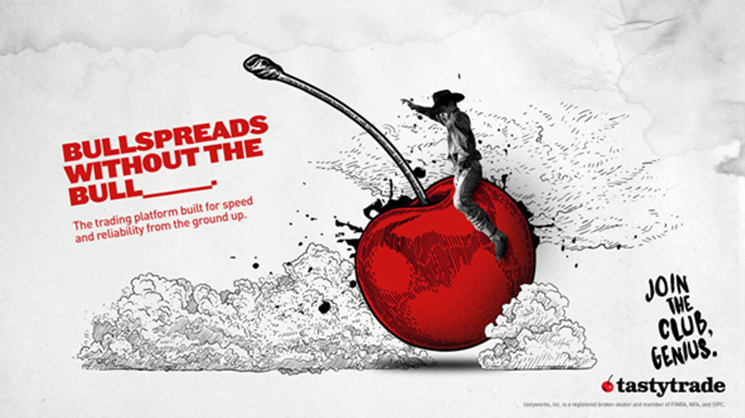
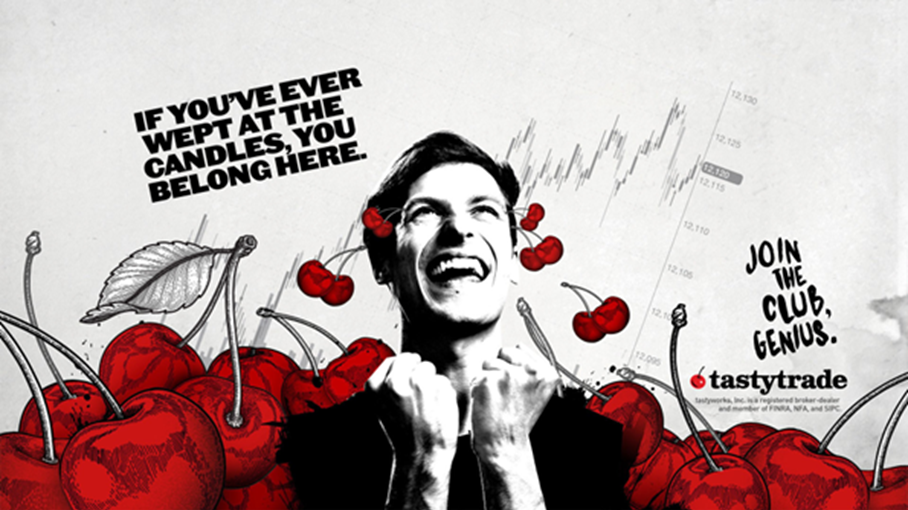
We briefed Opinionated to develop the first national campaign from the new positioning. The creative needed to retain the attitude of the existing community rather than suddenly make the brand look and sound like a conventional financial institution.
The key campaign insight came from another characteristic of active traders: they like to believe they are smarter than everyone else.
That led to:
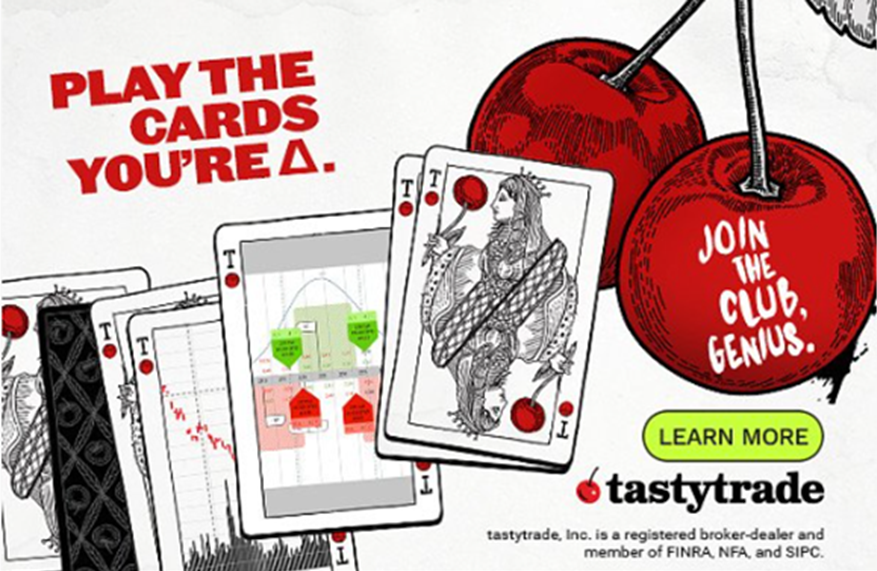
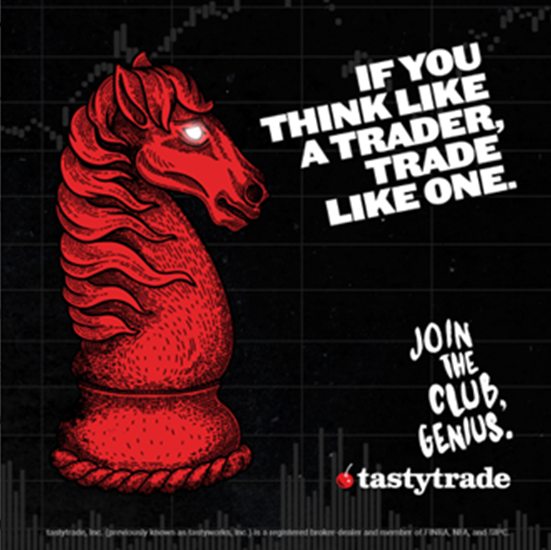
Join the Club, Genius
“Genius” was deliberately tongue-in-cheek. It played to the confidence and slightly contrarian mindset of the Enterprising Maverick without taking itself too seriously.
“Join the Club” carried another important meaning. tasty had always possessed a sense of community – the “tasty nation” – built around people who shared the same enthusiasm for trading and improving their craft.
The campaign therefore invited traders into something bigger than another brokerage account. If you believed you could trade differently and do better, there was a community of people who thought the same way.
It brought the strategy, customer mindset and challenger personality together in a way that felt unmistakably tasty.

The brand impact
The campaign marked tastytrade’s first national brand-building push in the US.
Around 18 months after launch, prompted awareness had increased from 11% to 19%.
IG Group’s annual report specifically highlighted the development of tastytrade’s US marketing capabilities and the contribution made by the wider Group marketing team to building awareness.
That movement is particularly meaningful given the starting point. tastytrade was competing against some of America’s largest and most established brokerage brands, while historically having invested relatively little in broad-reach marketing.
The strategy had given the business something it previously lacked: a distinctive proposition and brand platform capable of being communicated at scale without losing the personality that had created its original following.
The commercial impact
Brand was one component of a wider programme of business growth, so the commercial results should not be attributed to marketing alone. But the period following the repositioning and national campaign saw significant momentum in the business.
In FY24, tastytrade’s total revenue increased 23% in US dollars. Trading revenue grew 10%, while first trades also increased 10% year on year. Client equity reached a record $5.1 billion.
Why the strategy worked
The strategy succeeded because it did not attempt to replace the culture that had made tasty successful in the first place. It identified that culture as an asset and gave the organisation a way to preserve it as the business grew.
“Better” also connected the customer and the company around a shared belief rather than relying on a product feature that competitors could quickly copy. Traders were constantly trying to improve their performance; tastytrade positioned itself as the broker equally committed to improving their experience.
The architecture then made that idea scalable. Concentrating equity around the distinctive tasty name created a recognisable ecosystem rather than a collection of disconnected businesses.
Finally, the creative expression remained true to the audience. “Join the Club, Genius” did not sound like a traditional financial-services campaign because tastytrade was never intended to behave like a traditional financial-services company.
The result was a challenger brand with enough structure to scale without losing the attitude that had made people care about it in the first place.
Capabilities demonstrated
Brand Strategy | Challenger Brand Positioning | Brand Architecture | Value Proposition | Customer Insight | Naming Strategy | Customer Experience | Brand Management | Integrated Marketing | Growth Strategy
My role
As Global Head of Brand Marketing at IG Group, I led the tastytrade brand strategy from diagnosis through to implementation. I developed the positioning and brand blueprint, defined the brand architecture, led the naming strategy that moved tastyworks to tastytrade and personally sold the strategy into the tasty leadership team.
I then briefed and oversaw the development of the first national brand campaign, working with Opinionated on the creative expression while the tasty in-house design team developed the identity around the new strategy.
This work was completed while I was Global Head of Brand Marketing at IG Group, working in partnership with the tasty leadership team, the in-house tasty design team and Opinionated.